Top 9 Countries With 0 Income Tax in 2027 (And How They Actually Fund Themselves)
Imagine keeping 100% of your salary, consulting income, and investment gains every single month without forfeiting a single dime to personal income tax. While high-earners across Europe and North America surrender between 40% and 58% of their gross earnings to state treasuries, an elite group of sovereign nations operates with an absolute 0% personal income tax rate. But living tax-free is not magic—every country has to pay its bills somehow, whether through natural resource wealth, steep import tariffs, or luxury consumption duties. From the superyacht harbors of Monaco and Dubai to Caribbean offshore enclaves, here are the top 9 verified zero-income-tax countries in 2027, the realistic residency pathways to enter them, and the hidden cost trade-offs you must know before packing your bags.


#1: United Arab Emirates (UAE)
The United Arab Emirates—led by global commercial and lifestyle hubs Dubai and Abu Dhabi—has solidified its status as the world's premier destination for international entrepreneurs, high-net-worth investors, and digital nomads seeking tax efficiency.
In the UAE, individuals pay an absolute 0% personal income tax on employment wages, consulting fees, capital gains, stock dividends, and personal real estate returns. There are zero withholding taxes on remittances sent overseas, and no estate, gift, or inheritance taxes.
• How the State Generates Revenue: While individuals enjoy 0% income tax, the government balances its budget through a diversified matrix of fiscal mechanisms. In June 2023, the UAE enacted a federal corporate income tax of 9% on taxable corporate net profits exceeding AED 375,000 (~$102,000 USD), while preserving a 0% rate for qualifying free zone businesses. Upstream oil and gas extraction companies pay concession taxes between 55% and 85%. Additionally, the state levies a standard 5% Value Added Tax (VAT), a 4% real estate transfer fee through the Dubai Land Department (DLD), and municipal housing fees assessed through utility bills.
• Residency Pathway: Obtaining legal tax residency in the UAE is streamlined through the 10-year renewable Golden Visa, granted to individuals who invest a minimum of AED 2,000,000 (~$545,000 USD) in UAE real estate, or 5-year Green Visas for specialized freelancers and high-earning professionals.
Calculate your net savings compared to Western tax brackets using our Tax Calculator and evaluate take-home salary conversions with our Salary Calculator.

#2: Principality of Monaco
Perched on the glamorous French Riviera, the sovereign city-state of Monaco is globally renowned as the ultimate enclave of ultra-high-net-worth individuals. By historic decree of Prince Charles III in 1869, Monaco eliminated direct personal income taxes for all resident individuals.
Residents of Monaco pay 0% personal income tax on salaries and investment income, 0% capital gains tax, 0% wealth tax, and 0% direct-line inheritance tax (transfers between parents and children or between spouses). The single historical exception applies to French nationals residing in Monaco, who remain subject to French personal income taxation under the 1962 bilateral Franco-Monegasque tax treaty.
• How Monaco Funds Public Services: Monaco provides world-class public security, pristine municipal services, and top-tier infrastructure without levying an income tax. The state funds its treasury primarily through a standard 20% Value Added Tax (TVA) shared within a customs union with France, commercial registration fees, a 25% corporate tax on businesses that generate more than 25% of their revenue outside the Principality, and state-controlled monopolies including the Monte Carlo Casino, postal services, and telecommunications.
• Residency Requirements: Gaining Monegasque residency requires substantial balance sheet liquidity. Applicants must deposit a minimum of €500,000 into a private Monaco bank, prove clean criminal records, and lease or purchase residential property in one of the most expensive real estate markets on Earth (where prices frequently exceed €50,000 to €75,000 per square meter).
Compare sales and value-added tax rates across jurisdictions using our VAT Calculator and model real estate capital commitments with our Rent vs. Buy Calculator.

#3: The Cayman Islands
The Cayman Islands—a British Overseas Territory located in the western Caribbean Sea—is one of the world's most sophisticated international financial centers. Over 80% of the world's offshore hedge funds, private equity vehicles, and institutional investment partnerships are legally domiciled in Grand Cayman.
For individuals and corporations alike, the Cayman Islands levies 0% personal income tax, 0% corporate tax, 0% capital gains tax, 0% payroll tax, 0% withholding tax, and 0% inheritance tax. There is no direct taxation whatsoever on earnings or accumulated wealth.
• How the Government Operates on "Coercive Revenue": With no direct income or sales taxes, the Cayman Islands government relies entirely on indirect fees and customs tariffs. The government generates hundreds of millions of dollars annually through import duties (ranging between 22% and 27% on consumer products and food brought onto the island), annual fund registration fees, banking license levies, and substantial work permit fees ($500 to over $30,000 annually per expatriate employee). Additionally, real estate transactions carry a non-negotiable 7.5% government stamp duty.
• Residency by Investment: High-net-worth individuals can secure a 25-year renewable Certificate of Permanent Residence for Persons of Independent Means by investing a minimum of CI$2,000,000 (~$2.4 million USD) in developed Grand Cayman real estate, alongside demonstrating substantial ongoing liquid assets.
Stress-test your expected investment yields and capital compounding using our Investment Calculator and Compound Interest Calculator.

#4: The Bahamas
Located just 50 miles off the southeastern coast of Florida, the Commonwealth of The Bahamas is a premier sovereign archipelago renowned for private wealth management, luxury maritime lifestyle, and complete freedom from direct income taxation.
Residents of The Bahamas enjoy an absolute 0% personal income tax on salaries and business profits, 0% capital gains tax, 0% gift tax, and 0% inheritance tax. For decades, the nation has served as an accessible tax-free residency jurisdiction for European, Canadian, and Latin American wealth owners seeking geographic proximity to North American commerce.
• How the Bahamian Government Funds Itself: The Bahamian fiscal model relies heavily on indirect consumption and asset taxes. The primary state revenue driver is a standard 10% Value Added Tax (VAT) applied to domestic goods and services, paired with steep import customs duties (often 20% to 45% on motor vehicles, household goods, and appliances). The state also collects annual Real Property Tax (scaled up to 1.5% to 2% on owner-occupied residential properties above $1 million) and mandatory National Insurance Board payroll contributions.
• Accelerated Residency Pathway: The Bahamas offers an Accelerated Permanent Residency program for foreign nationals who purchase high-end residential real estate valued at $750,000 USD or more, granting expedited processing and lifetime residency rights for qualifying family members.
Model the long-term impact of real estate mortgage financing versus cash equity using our Mortgage Calculator and evaluate consumer tax burdens with our VAT Calculator.

#5: Bermuda
Bermuda—a self-governing British Overseas Territory in the North Atlantic—commands one of the highest per capita GDPs on Earth. It serves as the undisputed global capital for commercial property-catastrophe reinsurance, captive insurance vehicles, and international shipping registries.
Bermuda imposes 0% personal income tax, 0% capital gains tax, and 0% personal wealth or inheritance taxes. High-earning corporate executives, financial underwriters, and affluent retirees keep 100% of their personal investment returns and employment compensation.
• Fiscal Revenue via Payroll and Land Taxes: Rather than levying a traditional income tax directly on individuals, Bermuda generates government revenue via an Employer Payroll Tax (scaled progressively up to 10.25%, with employers legally permitted to deduct a portion up to approximately 6% from employee paychecks). The island also relies heavily on customs import tariffs (typically 25% on imported goods), biennial Land Tax assessments on residential properties, and corporate licensing fees paid by multinational reinsurance giants.
• Economic Investment Certificate: High-net-worth investors seeking Bermuda residency can obtain an Economic Investment Residential Certificate (EIRC) by deploying a minimum of BMD $2,500,000 (~$2.5M USD) into qualifying Bermuda real estate, government bonds, or established local commercial enterprises.
Evaluate your effective hourly earning power and baseline compensation metrics using our Freelance Hourly Rate Calculator and Salary Calculator.

#6: State of Qatar
Positioned on the Arabian Peninsula, the State of Qatar commands the third-largest natural gas reserves on Earth and ranks among the wealthiest nations globally in terms of purchasing power per capita.
Qatar imposes 0% personal income tax on individual salaries, wages, allowances, and personal investment returns. Citizens and foreign expatriate residents alike retain 100% of their employment compensation without any personal tax deductions.
• Sovereign Hydrocarbon Revenues: Qatar does not require personal income taxes because the state budget is overwhelmingly funded by liquefied natural gas (LNG) and crude petroleum exports managed by state-owned giant QatarEnergy. For commercial enterprises, Qatar levies a flat 10% corporate tax strictly on foreign-owned corporate entities operating in the country (wholly Qatari or GCC-owned enterprises are exempt). Qatar also levies a 100% selective excise tax ("sin tax") on tobacco, alcohol, and energy drinks, alongside nominal municipal fees.
• Real Estate Residency: Non-Qatari citizens can secure permanent residency by investing a minimum of $1,000,000 USD in designated luxury master-planned developments (such as The Pearl-Qatar, West Bay Lagoon, or Lusail City). This permanent residency status grants holders and their families access to Qatar’s state-of-the-art public healthcare and education infrastructure.
Project multi-decade wealth compounding and simulate asset allocation strategies with our Investment Calculator and Future Value Calculator.

#7: State of Kuwait
The State of Kuwait possesses approximately 104 billion barrels of proven crude oil reserves—accounting for more than 8% of the global total. Kuwait’s exceptionally strong fiscal position has allowed it to maintain a 0% personal income tax regime for both Kuwaiti citizens and foreign expatriates.
There is no personal income tax, no capital gains tax on individual investments, and no personal property tax. Expatriate employees working in Kuwait receive their gross salary in full without income tax deductions.
• Oil Reserves and the Kuwait Investment Authority (KIA): State expenditures are funded almost entirely (over 85%) by crude oil exports through the Kuwait Petroleum Corporation (KPC). Furthermore, Kuwait established the Kuwait Investment Authority (KIA) in 1953—the world’s oldest sovereign wealth fund—which commands over $900 billion in diversified global assets, generating massive foreign dividend yields that support state budgets.
• Corporate Taxation of Foreign Entities: Kuwait levies a flat 15% corporate income tax strictly on the net profits of foreign corporate entities operating within Kuwaiti territory. Domestic Kuwaiti and GCC-owned firms are exempt from corporate tax, paying only small statutory contributions toward national employment support and scientific research.
Calculate after-tax savings growth and compare interest accumulation across portfolios using our Savings Calculator.
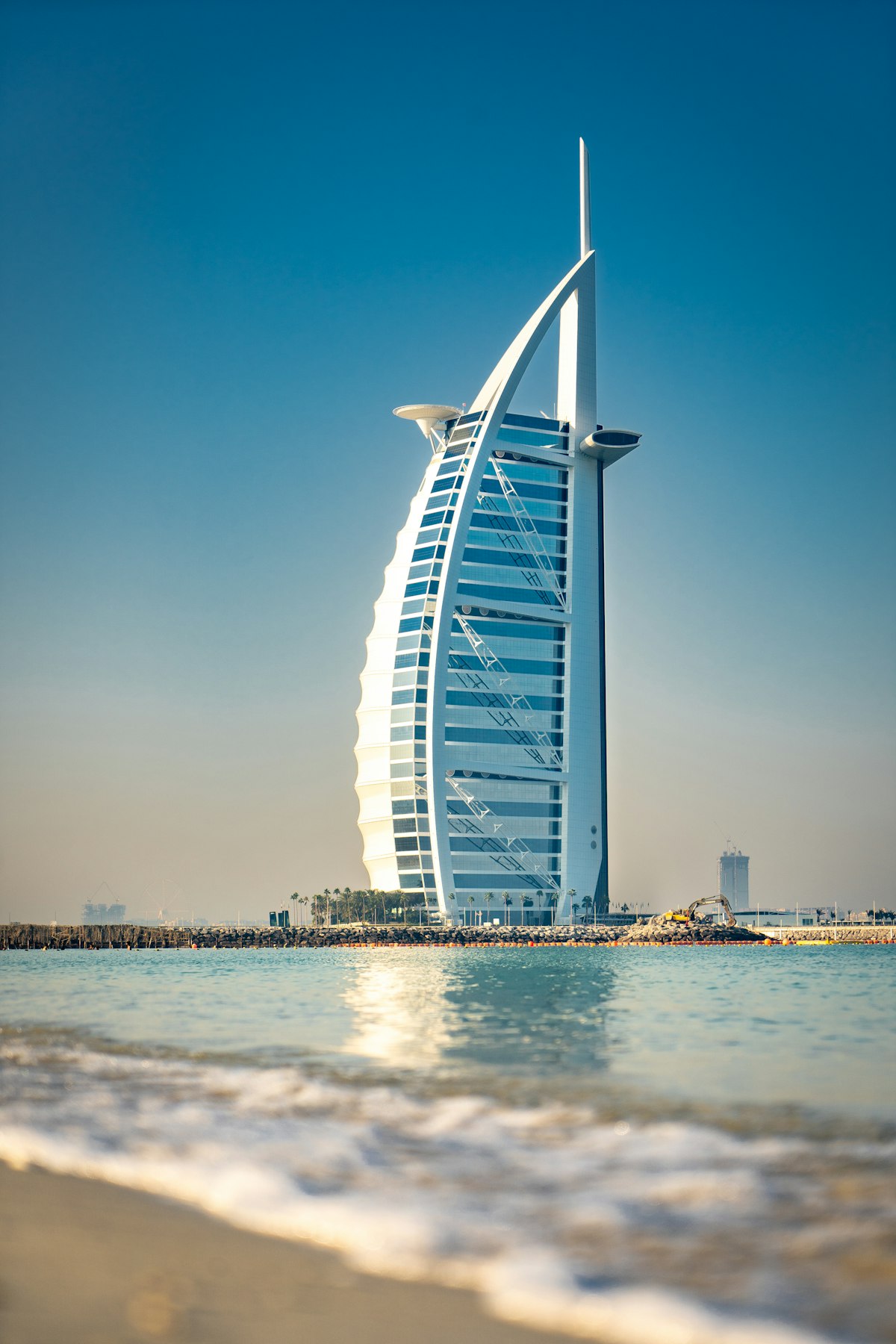
#8: Kingdom of Bahrain
The Kingdom of Bahrain is celebrated as one of the most commercially open and diversified financial capitals in the Middle East. As the first Gulf nation to discover oil in 1932, Bahrain was also the first to aggressively diversify into Islamic banking, aluminum manufacturing, and international tourism.
Bahrain levies 0% personal income tax on salaries, wages, consulting fees, capital gains, and investment returns. Foreign professionals and citizens receive their full earnings without income withholding.
• How Bahrain Balances Its Fiscal Books: Bahrain generates national revenue through petroleum production, state holdings managed by its sovereign wealth fund Mumtalakat, and consumption taxes. The Kingdom introduced a standard 10% Value Added Tax (VAT) in 2019 (doubled from 5% to 10% in 2022). For employment social insurance, expatriates contribute a nominal 1% of gross wages toward an unemployment social fund, while employers contribute 3% for workplace injury insurance.
• The Golden Residency Visa: Bahrain introduced an attractive Golden Residency Visa offering renewable 10-year residency to individuals who purchase local real estate valued at BHD 200,000 (~$530,000 USD), or retired expatriates who demonstrate a monthly income of BHD 4,000 (~$10,600 USD).
Analyze true consumption tax costs and calculate gross-to-net salary differentials using our VAT Calculator and Salary Calculator.
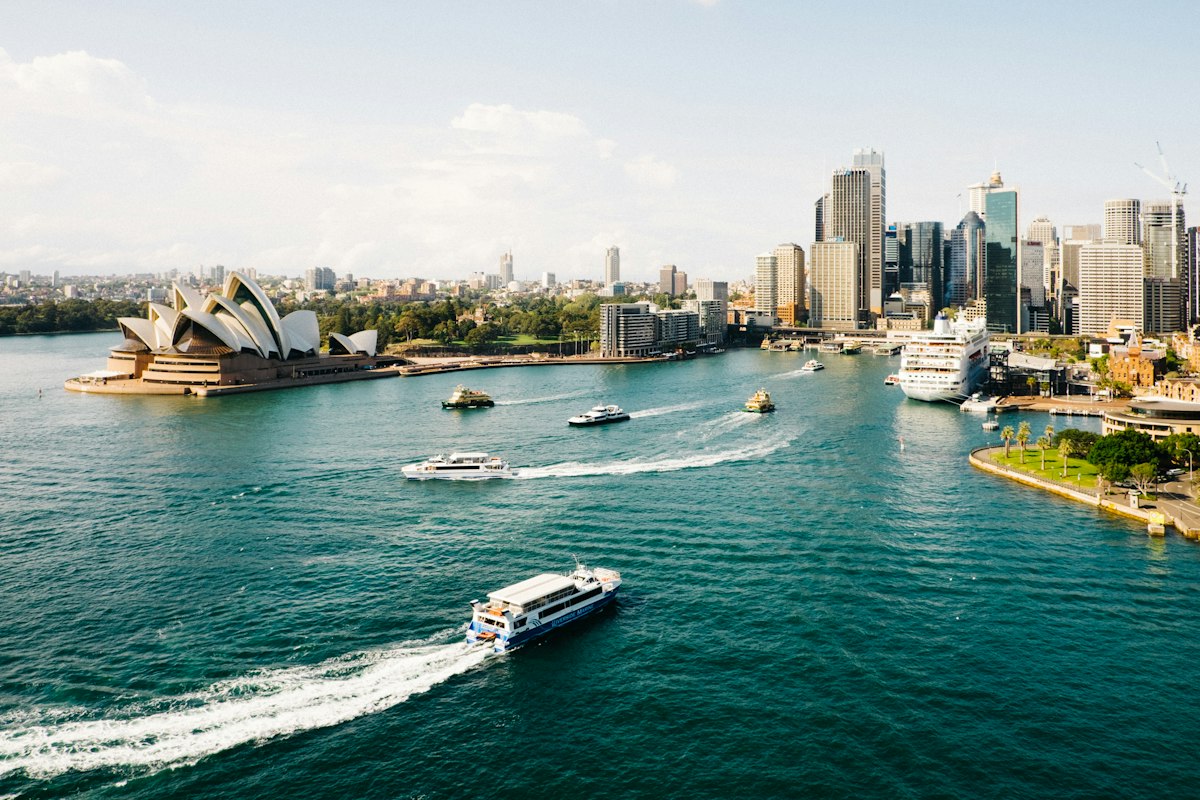
#9: Kingdom of Saudi Arabia (KSA)
As the largest economy in the Middle East and a prominent member of the G20, the Kingdom of Saudi Arabia is executing the most ambitious economic transformation on Earth under its "Vision 2030" modernization blueprint.
Saudi Arabia imposes 0% personal income tax on employment earnings, salaries, and capital gains for both Saudi citizens and foreign expatriates. Individuals living and working in the Kingdom do not file personal income tax returns on their wages.
• Corporate Taxes, Zakat, and VAT: The Saudi state budget is heavily financed by crude oil production through state energy giant Saudi Aramco, sovereign investments managed by the $900B+ Public Investment Fund (PIF), and consumption taxes. Saudi Arabia enforces a standard 15% Value Added Tax (VAT) on consumer goods and services. For commercial businesses, foreign shareholders are subject to a 20% corporate income tax on net profits, while Saudi and GCC nationals pay a religious tax known as Zakat (a 2.5% levy on net working capital and financial assets).
• Premium Residency ("Saudi Green Card"): Through the Saudi Premium Residency Center, affluent foreign investors and skilled talent can acquire renewable 5-year or permanent residency status by investing SAR 4,000,000 (~$1.06M USD) in real estate, establishing an accredited commercial business, or paying a direct one-time fee of SAR 800,000.
Examine business profitability and evaluate debt coverage across commercial ventures with our ROI Calculator and Loan Calculator.

Keep exploring Percentio
Browse the full directory to find related calculators and compare the assumptions that matter to your situation.
Browse all financial calculators →Related Blogs
8 Countries & Tax Havens Where Billionaires Hide Their Money (Ranked #8 to #1)

How Billionaires Use Trust Funds to Protect Generational Wealth (The Complete Estate Planning Guide)

Marginal vs. Effective Tax Rate: Why Higher Brackets Do Not Tax All Income

What Your Net Worth Should Be by Every Age (Median & Top 10% Benchmarks)
Frequently Asked Questions About Zero-Income-Tax Countries
Practical answers to common planning questions.