Top 10 Richest Banks in the World by Total Assets & Market Value (Updated Ranking)
Ten commercial institutions quietly control over $41 trillion in capital—more than double the entire annual economic output of the United States. Behind their glass skyscrapers and polished marble lobbies, these mega-lenders underwrite sovereign debts, finance global energy grids, and dictate the flow of international trade. While Wall Street commands unprecedented market valuations, a dramatic geopolitical shift over the past decade has handed the balance-sheet crown to Beijing's state-owned giants. From European banking dynasties to Manhattan trading floors and Asia's trillion-dollar credit machines, here is the definitive countdown of the world's 10 richest banks, ranked from lowest to highest by total assets.

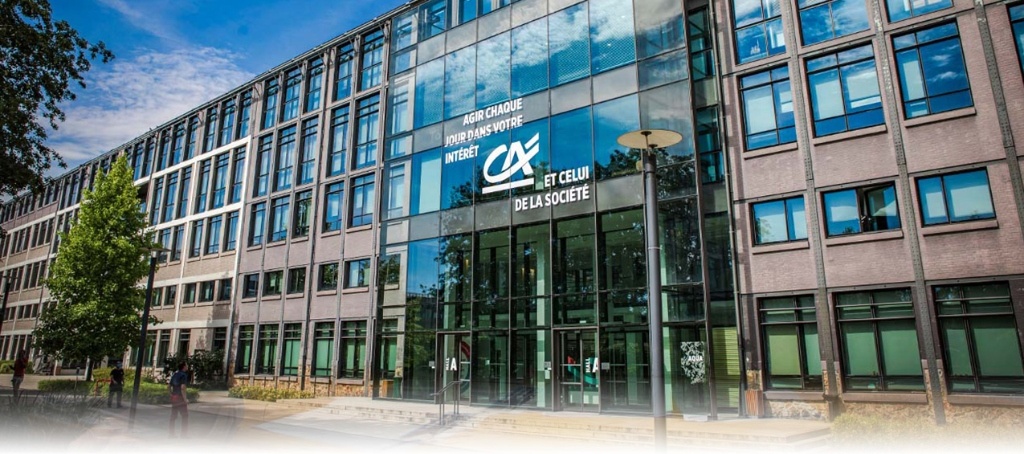
#10: Crédit Agricole Group (France) — $2.65 Trillion Assets (€2.40 Trillion EUR)
Kicking off our countdown at #10 is France’s Crédit Agricole Group, commanding total balance-sheet assets of $2.65 trillion USD (€2.40 trillion EUR).
Affectionately known across France as "La Banque Verte" (The Green Bank) due to its historic origins in 1894 financing small family farms and agricultural cooperatives, Crédit Agricole has evolved into a diversified global financial powerhouse. The group operates under a unique cooperative governance structure: 39 regional banks (Caisses Régionales) mutually own the majority stake in the publicly listed central entity, Crédit Agricole S.A.
• Europe's Retail Leader: Crédit Agricole is the single largest retail banking network in the European Union, serving more than 53 million clients across France, Italy, and Europe. More than one out of every three French households maintains their primary checking account with Crédit Agricole.
• Asset Management Giant (Amundi): Through its majority-owned subsidiary Amundi, Crédit Agricole operates Europe’s largest asset management institution, overseeing more than €2.1 trillion ($2.3 trillion USD) in assets under management across global mutual funds, exchange-traded funds (ETFs), and institutional pension mandates.
Calculate take-home salaries and model personal liquid reserves with our Salary Calculator and Savings Calculator.
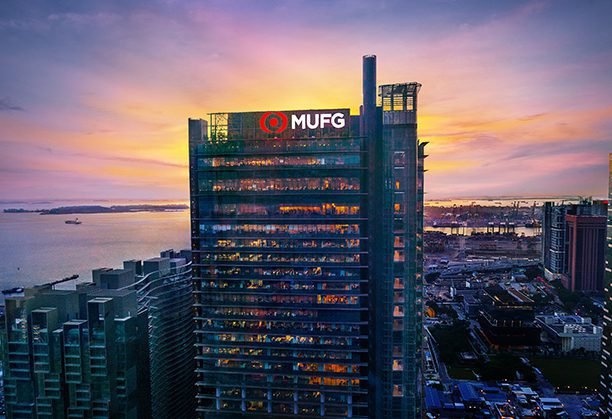
#9: Mitsubishi UFJ Financial Group (MUFG, Japan) — $2.78 Trillion Assets
Holding the ninth position globally and reigning as the largest banking conglomerate in the Asia-Pacific region outside of China is Japan’s Mitsubishi UFJ Financial Group, Inc. (MUFG). Headquartered in Tokyo’s prestigious Marunouchi financial district, MUFG oversees total balance-sheet assets exceeding $2.78 trillion USD (over ¥410 trillion JPY).
Formed in October 2005 through the mega-merger of Mitsubishi Tokyo Financial Group and UFJ Holdings, MUFG represents the financial heart of the historic Mitsubishi industrial keiretsu. The group commands a dominant domestic market share across commercial lending, retail trust banking, international project finance, and securities underwriting.
• The Masterstroke Investment in Morgan Stanley: In September 2008, at the absolute nadir of the Wall Street financial panic following the collapse of Lehman Brothers, MUFG executed one of the most profitable investments in corporate banking history: injecting $9.0 billion in emergency cash into Morgan Stanley in exchange for a 20% equity stake. Today, that strategic alliance generates billions in annual dividend income and collaboration profits across global investment banking.
• Global Expansion: In response to decades of domestic deflation and ultra-low Bank of Japan interest rate policies, MUFG has aggressively expanded into Southeast Asia, acquiring dominant stakes in major commercial banks across Thailand (Bank of Ayudhya), Indonesia (Bank Danamon), and the Philippines.
Calculate loan principal paydowns and analyze commercial debt yields using our Loan Calculator and ROI Calculator.
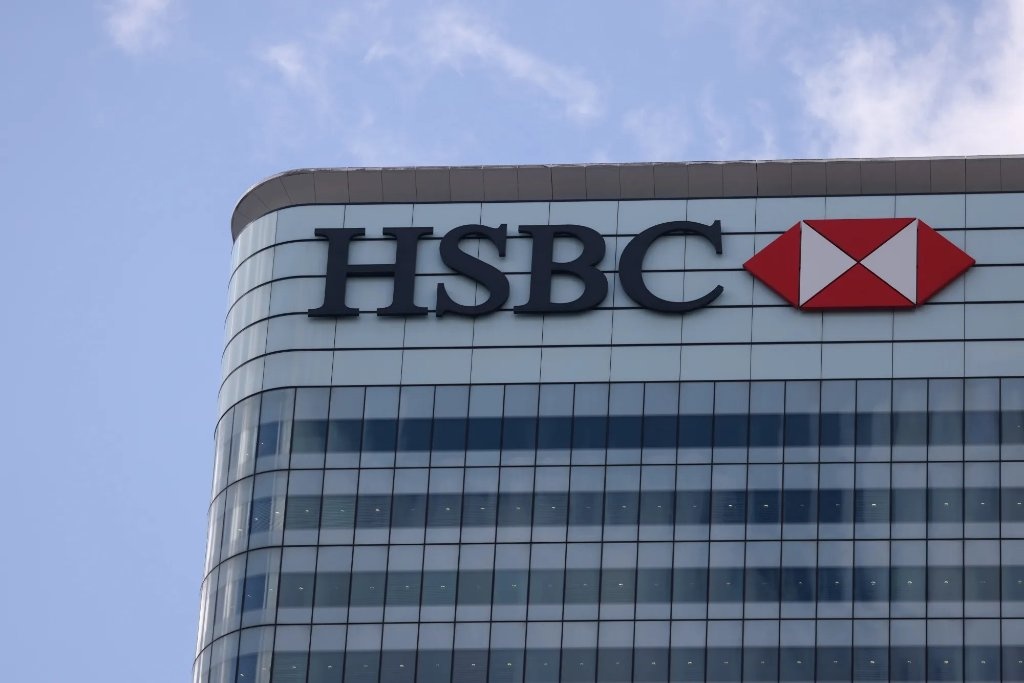
#8: HSBC Holdings PLC (United Kingdom) — $3.04 Trillion Assets
At #8 is The Hongkong and Shanghai Banking Corporation—universally known as HSBC Holdings PLC—commanding total balance-sheet assets of $3.04 trillion USD. Headquartered at 8 Canada Square in London’s Canary Wharf, HSBC is officially the largest bank in the United Kingdom and Europe.
Established in British Hong Kong in 1865 by Scottish merchant Thomas Sutherland to finance the burgeoning merchant trade between China, India, and Europe, HSBC was structured from its inception as an international trade bank. In 1991, HSBC Holdings plc was formed in the UK to act as the parent company, completing its historic acquisition of Midland Bank in 1992.
• The Pivot to Asia: Although legally headquartered in the United Kingdom, HSBC generates more than 70% of its adjusted pre-tax operating profits from Hong Kong, mainland China, and the broader Asia-Pacific region. Like Bank of China, HSBC is one of the three commercial institutions authorized to print Hong Kong Dollar banknotes.
• Global Reach: Operating across 62 countries and territories, HSBC serves over 42 million customers ranging from individual retail depositors to sovereign wealth funds and multinational corporate treasuries.
Project long-term compound savings growth and simulate global wealth accumulation using our Compound Interest Calculator.
#7: BNP Paribas (France) — $3.05 Trillion Assets (€2.70 Trillion EUR)
Claiming the seventh spot is France’s BNP Paribas, with total assets of $3.05 trillion USD (€2.70 trillion EUR). Formed in May 2000 through the historic merger of Banque Nationale de Paris (BNP) and investment bank Paribas (with roots tracing back to 1848), BNP Paribas stands as the largest banking conglomerate in the European Union and the entire eurozone.
Headquartered on the Boulevard des Italiens in Paris, BNP Paribas operates across 64 countries and employs more than 185,000 personnel. It operates four domestic retail banking markets across Europe: France, Italy (via Banca Nazionale del Lavoro - BNL), Belgium (via BNP Paribas Fortis), and Luxembourg.
• Corporate & Institutional Powerhouse: Beyond European retail banking, BNP Paribas is a global powerhouse in corporate and institutional banking (CIB), ranking as Europe’s premier dealer in foreign exchange derivatives, trade finance, debt capital markets, and syndicated lending.
• Stability Through European Turmoil: While several European rivals suffered existential balance-sheet crises over the past two decades, BNP Paribas navigated the European sovereign debt crisis and negative interest-rate regimes by maintaining strict credit underwriting and expanding global custody and clearing services.
Calculate after-tax yields across international investments using our Tax Calculator and evaluate certificate of deposit returns with our CD Calculator.
#6: Bank of America (BofA, United States) — $3.27 Trillion Assets
Holding the sixth spot globally and second in the United States is Bank of America Corporation, commanding $3.27 trillion USD in total balance-sheet assets. Headquartered in Charlotte, North Carolina, with executive trading headquarters in New York City, Bank of America is a cornerstone of American retail and commercial commerce.
The bank traces its roots to 1904, when visionary Italian-American entrepreneur Amadeo Giannini founded the Bank of Italy in San Francisco to provide banking services to working-class immigrants and small businesses overlooked by traditional commercial banks. Following the catastrophic 1906 San Francisco earthquake, Giannini famously set up a makeshift desk on a wooden plank across two barrels, extending immediate credit to reconstruct the city.
• Mammoth Retail & Wealth Machine: Today, Bank of America serves approximately 69 million consumer and small business clients across the United States through 3,800 retail financial centers and digital banking platforms utilized by over 57 million active users. It manages over $1.9 trillion in consumer deposits.
• Merrill Lynch Wealth Management: Through its landmark acquisition of Merrill Lynch during the 2008 financial crisis, Bank of America operates one of the world's largest private wealth management franchises ("The Thundering Herd"), overseeing more than $3.8 trillion in total client assets.
Explore how high-net-worth households structure liquid wealth and project portfolio returns with our Future Value Calculator.
#5: JPMorgan Chase & Co. (United States) — $4.10 Trillion Assets ($660B+ Market Cap)
Entering the top five is the undisputed crown jewel of Western banking: JPMorgan Chase & Co. With total assets of $4.10 trillion USD, JPMorgan Chase is the largest financial institution in the Western Hemisphere and the most profitable commercial bank on Earth.
Traced back to 1799 through Aaron Burr’s The Manhattan Company and legendary financier J. Pierpont Morgan, the modern banking colossus is the product of monumental mergers combining Chase Manhattan, Chemical Bank, Bank One, Bear Stearns, Washington Mutual, and First Republic Bank.
• The King of Market Capitalization: Where Chinese banks trade at modest price-to-book valuations due to state lending controls, JPMorgan Chase commands an astonishing market capitalization exceeding $660 billion USD—making it worth more than ICBC and CCB combined. In fiscal year 2024–2025, JPMorgan generated over $50 billion in annual net income, delivering an industry-leading Return on Tangible Common Equity (ROTCE) of 19% to 21%.
• America’s "Lender of Last Resort": Under the long-standing leadership of Chairman and CEO Jamie Dimon, JPMorgan Chase serves as the ultimate stabilizing pillar of the US financial system. During the 2008 global financial crisis and the 2023 regional banking turmoil, the Federal Reserve and FDIC specifically turned to JPMorgan to acquire and stabilize failing institutions.
Analyze return on equity, corporate hurdle rates, and investment growth with our ROI Calculator and Compound Interest Calculator.
#4: Bank of China (BOC, China) — $4.58 Trillion Assets
Kicking off China’s dominant "Big Four" state-owned banking monopoly at #4 is Bank of China (BOC), which commands $4.58 trillion USD (32.4 trillion RMB) in total balance-sheet assets.
Established in 1912 by approval of provisional president Dr. Sun Yat-sen to succeed the imperial Ta-Ching Government Bank, Bank of China is the oldest continuously operating financial institution in the country. From 1912 to 1942, it functioned alongside the Central Bank of China as the nation’s official currency-issuing authority.
• Cross-Border Trade & Currency Issuance: Bank of China is by far the most globally integrated and internationally active of China’s major banks, operating full-service corporate branches and trading desks in 64 countries across six continents. Crucially, Bank of China (Hong Kong) is one of only three commercial banks legally authorized by the Hong Kong Monetary Authority to issue legal tender Hong Kong Dollar banknotes.
• Foreign Exchange Dominance: BOC handles the lion’s share of China’s foreign currency reserves, international clearing transactions, and cross-border trade settlements in Offshore Renminbi (CNH), serving as the financial bridge between mainland businesses and Western corporate partners.
Calculate foreign currency exchange yield differentials and project long-term deposit growth with our Savings Calculator.
#3: China Construction Bank Corp. (CCB, China) — $5.40 Trillion Assets
Taking the bronze medal at #3 is Beijing-headquartered China Construction Bank Corporation (CCB), with total assets exceeding $5.40 trillion USD (38.3 trillion RMB).
Founded in 1954 under the administration of the Ministry of Finance, CCB was originally chartered to manage and allocate state budgetary appropriations for national industrialization, urban construction, and infrastructure engineering projects. In 1994, the institution completed a historic transition into a full-service commercial banking conglomerate.
• The Preeminent Real Estate Lender: Today, CCB is mainland China’s undisputed leader in residential mortgage lending, commercial real estate development financing, and municipal infrastructure bonds. The bank maintains an extensive network of approximately 14,500 domestic branch locations and employs roughly 375,000 financial professionals.
• International Reach: CCB maintains overseas branches and investment banking subsidiaries in major financial capitals, including London, New York, Frankfurt, Tokyo, Singapore, and Zurich, providing liquidity to multinational corporate syndicates.
Model residential mortgage amortizations, down payment schedules, and interest rates using our Mortgage Calculator and compare scenarios with our Rent vs. Buy Calculator.
#2: Agricultural Bank of China (AgBank, China) — $5.62 Trillion Assets
Holding the runner-up spot at #2 globally is the Agricultural Bank of China (often known as AgBank or ABC). With total balance-sheet assets surpassing $5.62 trillion USD (40.0 trillion RMB), AgBank represents an indispensable pillar of China’s dual rural-urban economy.
Originally conceived under Chairman Mao Zedong in 1951 to provide micro-credit to peasant farmers and agricultural communes, AgBank was formally restructured in 1979 as a specialized state commercial bank. Today, it operates the most extensive physical retail distribution network in the world, with more than 24,000 domestic branches and automated banking centers serving approximately 860 million individual retail clients—more than double the entire population of the United States.
• Historic Public Offering: In July 2010, Agricultural Bank of China completed a dual listing on the Hong Kong Stock Exchange and Shanghai Stock Exchange that raised an astonishing $22.1 billion USD—setting a historic record as the largest Initial Public Offering (IPO) in world history at the time.
• Corporate Modernization: While maintaining its agricultural lending roots, AgBank has aggressively expanded into metropolitan corporate finance, wholesale trade syndication, institutional asset management, and digital retail fintech services across Tier-1 Chinese mega-cities.
Evaluate agricultural loan amortizations and commercial financing payback structures with our Amortization Calculator and Loan Calculator.
#1: Industrial and Commercial Bank of China (ICBC, China) — $6.30 Trillion Assets
Standing crowned at #1 as the richest and largest bank on planet Earth is the Industrial and Commercial Bank of China (ICBC). Established in Beijing in 1984 as a state-owned commercial bank, ICBC has grown into the single largest financial institution in human history by total balance-sheet assets—a title it has held for over a decade.
With a staggering balance sheet exceeding $6.30 trillion USD (over 44.7 trillion RMB), ICBC’s asset base is larger than the entire gross domestic product (GDP) of Japan, Germany, or the United Kingdom. The bank operates more than 16,000 domestic branch outlets, employs over 420,000 personnel, and provides commercial banking services to more than 720 million individual retail customers and 11 million corporate accounts.
• Strategic Geopolitical Role: Unlike Western commercial banks driven strictly by quarterly shareholder returns, ICBC operates as the premier state-directed lending vehicle for the Chinese government. It underwrites monumental national infrastructure projects, including high-speed rail networks, green energy grids, and cross-border commercial maritime corridors under China’s trillion-dollar Belt and Road Initiative.
• Global Presence: Beyond mainland China, ICBC maintains direct operational branches, subsidiaries, and correspondent relationships across more than 49 countries and territories spanning North America, Europe, Africa, and Southeast Asia.
Simulate multi-decade compounding reserves and corporate asset yields using our Investment Calculator and Compound Interest Calculator.
#11: Total Assets vs. Market Capitalization: The Global Banking Divide
When evaluating the world’s "richest" banks, the fundamental financial question is: Are you measuring balance-sheet size, or economic market valuation? The divergence between total accounting assets and stock market capitalization reveals a profound geopolitical divide between Eastern state capitalism and Western shareholder returns.
Mainland China’s Big Four (ICBC, AgBank, CCB, and Bank of China) control over $22 trillion in combined assets because China possesses the world’s highest domestic household savings rate (over 45% of GDP). Chinese citizens deposit their wages into state-backed commercial banks, which funnel those trillions into state-owned enterprises, urban housing, and high-speed rail networks. However, because their lending is guided by state industrial policy and their net interest margins are compressed, global investors trade Chinese bank equities at heavy discounts (often 0.4x to 0.6x price-to-book value).
In stark contrast, Wall Street titan JPMorgan Chase commands a market capitalization of roughly $660 billion—more than double any bank on Earth. Investors award JPMorgan premium valuations because of its fortress balance sheet, superior 19%+ return on equity, and dominant market share in high-margin advisory fees, wealth management, and digital credit payments.
| Bank Name | Country | Headquarters | Total Assets (USD) | Market Cap (USD) | Approx. Employees | Primary Global Strength |
|---|---|---|---|---|---|---|
| Industrial and Commercial Bank of China (ICBC) | China 🇨🇳 | Beijing | $6.30 Trillion | $240 Billion | 420,000+ | Infrastructure lending & commercial banking |
| Agricultural Bank of China (AgBank) | China 🇨🇳 | Beijing | $5.62 Trillion | $190 Billion | 450,000+ | Rural credit & state agriculture initiatives |
| China Construction Bank Corp. (CCB) | China 🇨🇳 | Beijing | $5.40 Trillion | $185 Billion | 370,000+ | Urban infrastructure & domestic real estate |
| Bank of China (BOC) | China 🇨🇳 | Beijing | $4.58 Trillion | $165 Billion | 310,000+ | Global trade settlement & foreign exchange |
| JPMorgan Chase & Co. | United States 🇺🇸 | New York | $4.10 Trillion | $660+ Billion | 310,000+ | Wall Street investment banking & markets |
| Bank of America Corp. | United States 🇺🇸 | Charlotte | $3.27 Trillion | $320 Billion | 215,000+ | US consumer banking, cards & commercial credit |
| BNP Paribas | France 🇫🇷 | Paris | $3.05 Trillion | $90 Billion | 190,000+ | European institutional & corporate finance |
| HSBC Holdings PLC | United Kingdom 🇬🇧 | London | $3.04 Trillion | $160 Billion | 220,000+ | Asia-Europe trade corridor & offshore wealth |
| Mitsubishi UFJ Financial Group (MUFG) | Japan 🇯🇵 | Tokyo | $2.78 Trillion | $120 Billion | 160,000+ | Cross-border syndications & Japanese corporates |
| Crédit Agricole Group | France 🇫🇷 | Montrouge | $2.65 Trillion | $45 Billion | 145,000+ | European mutual banking & asset management |
All ten institutions on this ranking are classified by the Basel-based Financial Stability Board (FSB) as Global Systemically Important Banks (G-SIBs)—institutions deemed "Too Big to Fail." Under international Basel III and IV regulatory standards, these mega-banks are subjected to rigorous stress tests, mandatory total loss-absorbing capacity (TLAC) ratios, and additional capital surcharges to protect the global monetary system from collapse.
Explore how the world’s most powerful financial dynasties manage multi-generational wealth in our study on Top 12 Richest Families in the World, and discover wealth structuring mechanisms in How Billionaires Use Trust Funds to Protect Wealth.
Keep exploring Percentio
Browse the full directory to find related calculators and compare the assumptions that matter to your situation.
Browse all financial calculators →Related Blogs
12 Richest Families in the World (Ranked from #12 to #1 With Net Worth, Companies & Dynastic Empires)
8 Countries & Tax Havens Where Billionaires Hide Their Money (Ranked #8 to #1)

How Billionaires Use Trust Funds to Protect Generational Wealth (The Complete Estate Planning Guide)

17 Ways to Invest $1 MILLION (And Build Generational Wealth)
Frequently Asked Questions About the Richest Banks in the World
Practical answers to common planning questions.