Will Banks and ATMs Close on November 17? Blackout Rumors, FEMA Alert Facts, and How Much Cash You Actually Need
Viral videos across TikTok, X, and YouTube claim that a nationwide electrical and banking blackout will hit the United States on November 17. The rumors have sparked widespread anxiety about frozen ATMs, disrupted credit card networks, and whether families should rush to withdraw physical cash. Here is the verified reality behind the scheduled FEMA emergency test, the technological architecture that keeps American banks operational, and the exact mathematical formula for how much cash you should realistically keep at home without losing thousands to the "mattress tax."

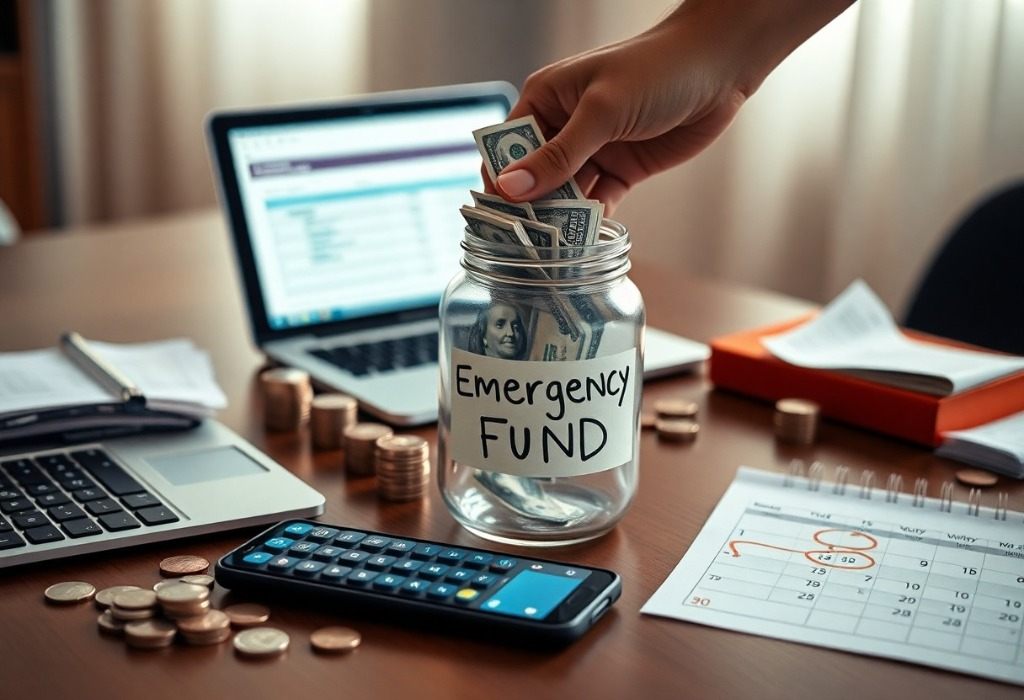
Try our free Emergency Savings Calculator to calculate your savings growth and interest.
1. Is There a Blackout in the United States on November 17? Rumor vs. Fact
Direct Answer: No. There is no nationwide power blackout, no electrical grid shutdown, and no banking freeze scheduled or predicted in the United States on November 17.
The hysteria stems from a classic modern internet distortion: online conspiracists combined an official government testing announcement with out-of-context pop-culture references to engineer viral panic. Here is the primary source reality behind November 17:
| Key Question / Metric | Viral Rumor Claim | Verified Fact (Primary Sources) |
|---|---|---|
| Is there a blackout on November 17? | Nationwide electrical grid shutdown | FALSE. Power grid operates normally with zero planned blackouts. |
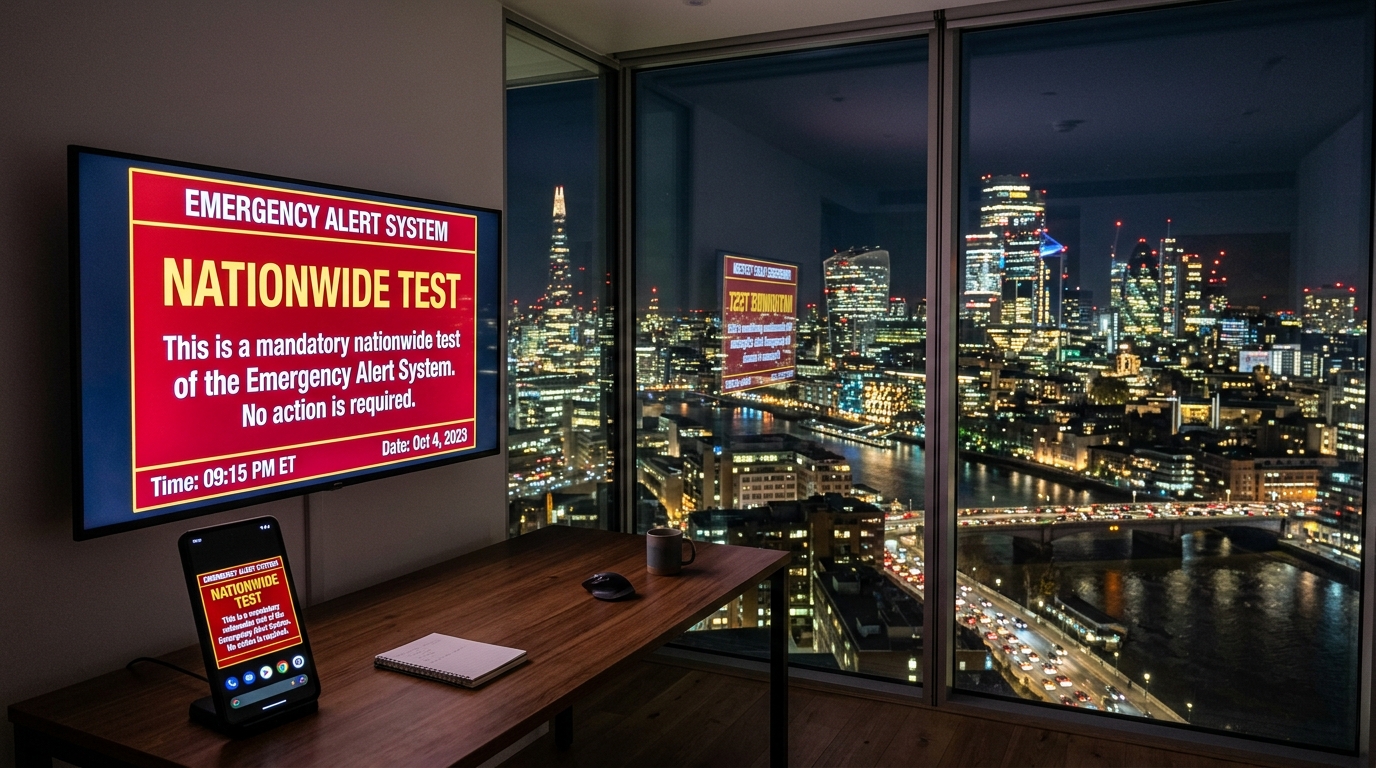
| What is actually taking place? | Society-wide infrastructure collapse | Routine 60-second FEMA & FCC Emergency Alert System broadcast test. |
| Scheduled Time of Alert | All-day power and communications outage | Approximately 2:20 PM Eastern Time for roughly one minute only. |
| Will Banks and ATMs Close? | All financial institutions frozen | NO. All commercial banks, branches, ATMs, and teller services open normally. |
| Will Debit / Credit Cards Work? | Payment networks and POS terminals offline | YES. Visa, Mastercard, and digital wallets (Apple Pay) process uninterrupted. |
| Should You Pull Cash From the Bank? | Withdraw all checking and savings balances | NO. Deposits are FDIC-insured up to $250,000; cash hoarding loses yield. |
| Recommended Cash to Keep at Home | Thousands in paper currency hoarded | 72-Hour Rule: $300 to $1,000 in small bills ($5, $10, $20) for emergencies. |
| Primary Regulatory Authorities | Anonymous dark-web conspiracists | FEMA, FCC (Title 47 CFR Part 11), and FDIC (12 U.S.C. § 1821). |
- The Official FEMA / FCC Test: Under Title 47 of the Code of Federal Regulations (CFR Part 11), the Federal Emergency Management Agency (FEMA) and the Federal Communications Commission (FCC) periodically conduct nationwide tests of the Emergency Alert System (EAS). Around 2:20 p.m. Eastern Time, participating broadcast television networks, radio stations, and cable operators will briefly interrupt programming for roughly 60 seconds with an audible tone and standard test graphic stating: "This is a test of the National Emergency Alert System."
- Zero Grid or Utility Impact: An EAS transmission is strictly an acoustic and visual broadcast signal. It does not control, restrict, or disconnect power distribution transformers, electrical substations, municipal utilities, cellular towers, or internet service providers.
- The "Simpsons" and TikTok Hoax: Viral posts spliced together scenes from an old animated episode of The Simpsons with genuine FEMA test notices to manufacture an apocalyptic narrative designed to capture social media algorithms.
No regulatory agency, scientific body, utility provider, or branch of the United States government has issued any warning of power disruptions for November 17. The nation's electrical grids are functioning under standard regional load distributions.
2. Will Banks, ATMs, and Card Payments Shut Down During the Alert?
Direct Answer: No. Retail bank branches, Automated Teller Machines (ATMs), point-of-sale (POS) merchant terminals, debit cards, and credit cards will operate completely as normal throughout November 17.
To understand why a broadcast emergency test cannot interrupt American financial operations, consider the technical architecture that governs commercial banking:
- Geographically Mirrored Data Centers: Major institutions like JPMorgan Chase, Bank of America, and regional credit unions do not store ledger data on a single local server. Transaction processing runs across synchronized, geographically separated data centers with redundant optical fiber loops.
- Uninterruptible Power Systems (UPS) and Industrial Generators: Financial mainframes and server clusters are fortified with massive uninterruptible battery arrays and on-site diesel generators capable of sustaining weeks of independent continuous operation even during catastrophic municipal power failures.
- Decoupled Broadcast vs. Financial Telecoms: The Emergency Alert System operates over public broadcast channels (OTA radio, satellite television, cable headends). Banking protocols such as Fedwire, Automated Clearing House (ACH), and SWIFT travel across private, encrypted tier-1 telecommunication pipelines with zero technological crossover to consumer alert systems.
During the 60-second broadcast tone on television, credit card swipes at checkout counters, mobile digital wallet taps via Apple Pay and Google Pay, and online account transfers will process without hesitation.
3. The Mattress Tax: Why Panic-Hoarding Cash Costs You Thousands
Whenever viral rumors about bank closures circulate, human psychology gravitates toward a predictable panic reaction: rushing to the ATM to pull out paper currency. But treating your mattress as a bank vault carries massive financial consequences that most people fail to calculate.
When you pull cash out of an FDIC-insured account, you are subjecting yourself to two devastating invisible penalties: forfeited compound yield and the erosion of inflation, commonly known among economists as the "Mattress Tax."
Consider what happens when someone panics and withdraws $10,000 in paper cash to keep hidden at home, compared to maintaining that capital in a high-yield savings account (HYSA) earning an illustrative 4.50% Annual Percentage Yield (APY) alongside a modest 3.0% annual inflation rate:
Compound Future Value: FV = P × (1 + r/n)^(n×t)
Real Purchasing Power of Cash: PV = P ÷ (1 + i)^t
Lost Opportunity Cost = FV_hysa − P_cash
| Timeframe | $10,000 in Cash (Mattress) | $10,000 in 4.5% APY HYSA | Forfeited Interest | Purchasing Power Loss (3% Inflation) |
|---|---|---|---|---|
| 1 Year | $10,000 | $10,459 | -$459 | -$291 |
| 2 Years | $10,000 | $10,940 | -$940 | -$574 |
| 3 Years | $10,000 | $11,442 | -$1,442 | -$849 |
| 5 Years | $10,000 | $12,518 | -$2,518 | -$1,374 |
*Calculations illustrate a $10,000 principal compounding monthly at 4.50% APY against an assumed 3.00% annual CPI inflation rate. Bank interest rates fluctuate based on Federal Reserve benchmark adjustments. Cash held at home yields $0.00 while suffering permanent purchasing-power decay.
In just five years, parking $10,000 in cash in a closet surrenders over $2,500 in guaranteed compound growth, while the real-world purchasing power of those physical paper bills shrinks to less than $8,630 in today’s goods. Furthermore, physical cash has zero insurance protection against theft or home fires; standard homeowners and renters insurance policies typically cap cash loss reimbursement at a measly $200 to $1,000.
By contrast, deposits in federal banks are protected up to $250,000 per depositor, per ownership category, by the Federal Deposit Insurance Corporation (FDIC), and up to $250,000 in credit unions by the National Credit Union Administration (NCUA).
To model custom interest rates, compounding frequencies, and multi-year balances, test your figures in the Compound Interest Calculator.
For savers who prefer locking in a guaranteed rate for 6 to 12 months with zero market risk, explore fixed terms in the CD Calculator.
4. How Much Physical Cash Should You Actually Keep at Home in Case of an Emergency?
Direct Answer: Most financial planners, FEMA guidelines, and emergency management organizations recommend keeping between $300 and $1,000 in physical cash at home for immediate survival needs.
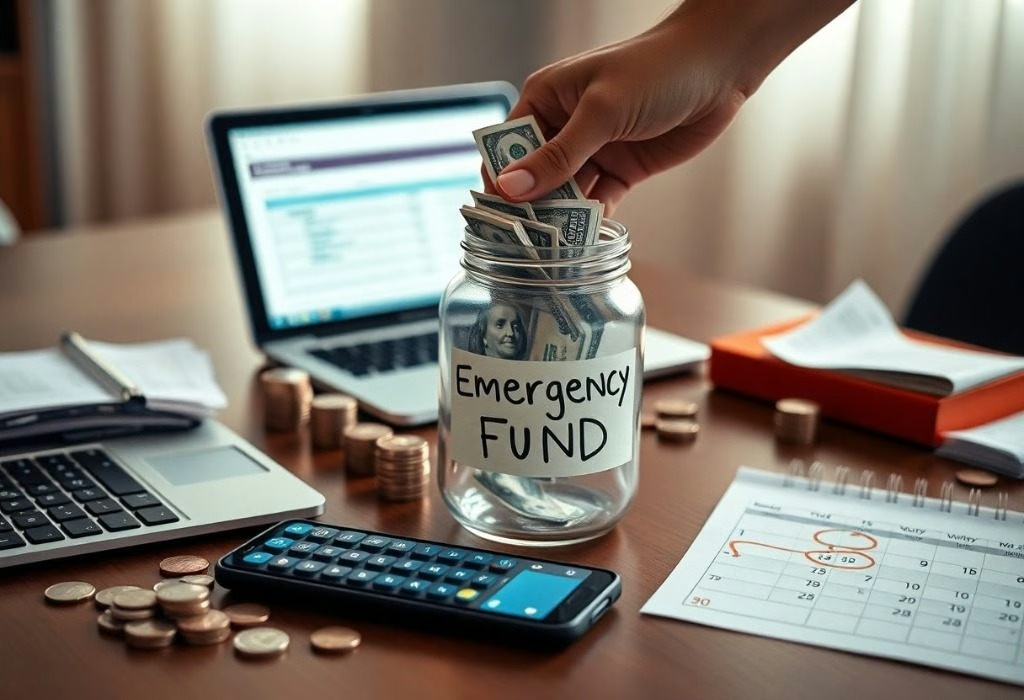
While hoarding your entire life savings in paper banknotes is a terrible financial mistake, being caught with zero physical currency during a localized severe storm, winter freeze, or temporary regional utility blip is equally imprudent. Preparedness authorities recommend separating your money into two distinct tiers: Immediate Pocket Cash (The 72-Hour Rule) and Core Emergency Liquidity (The 3-to-6 Month Reserve).
- The 72-Hour Physical Cash Reserve ($300 to $1,000): Maintain enough physical cash to buy three to seven days of immediate emergency supplies—fuel for vehicles, generator fuel, non-perishable groceries, drinking water, and prescription medicine. For most households, between $300 and $1,000 in cash is the recommended sweet spot.
- Stock Small Denominations ($5, $10, and $20 Bills): Never store your physical emergency fund in crisp $100 bills. During an actual local blackout, merchant card readers go down, and local gas stations or grocery stores often operate strictly in cash without the change to break large bills. Having twenty $20 bills, ten $10 bills, and twenty $5 bills guarantees you can pay exact change.
- Core Emergency Fund (3 to 6 Months in an HYSA): Your true financial lifeline—money to cover rent, mortgages, auto loans, insurance, and utilities if you lose your job or face medical emergencies—should always sit in an FDIC-insured high-yield savings account where it remains liquid, protected against theft, and constantly earning monthly interest.
If you have not calculated your baseline monthly expenses recently, look at our comprehensive breakdown on How to Build an Emergency Fund to establish your exact target savings balance.
5. What Happens to the Stock Market and Crypto During Emergency Broadcasts?
Beyond banks, viral blackout hoaxes always generate wild rumors regarding the stock market and digital assets like Bitcoin. Here is how financial markets actually handle emergency scenarios, and the real threat you need to guard against.
Stock Exchanges & Regulation SCI: The New York Stock Exchange (NYSE) and Nasdaq are governed by the Securities and Exchange Commission’s Regulation SCI (Systems Compliance and Integrity). Exchanges maintain hot-standby secondary matching engines in separate geographical states. Even if a catastrophic regional catastrophe strikes lower Manhattan or Northern New Jersey, trading engines seamlessly roll over without customer portfolio records being corrupted.
Bitcoin and Blockchain Networks: Cryptocurrencies run on decentralized, peer-to-peer networks spanning tens of thousands of independent validator nodes across more than 100 countries. An emergency alert or localized power cut in the United States does not stop the Bitcoin or Ethereum blockchains from generating blocks, validating transfers, and recording transactions.
- The Real Danger: "Emergency Transfer" Scams: The most severe financial risk from viral rumors is not the government—it is cybercriminals exploiting fear. During viral panic cycles, fraudsters send mass SMS and email phishing alerts impersonating banks or federal agencies, warning: "Alert: Banking freeze imminent. Transfer your funds to our secure holding account or offline wallet immediately."
- Never Move Money Based on Unsolicited Alerts: Legitimate financial institutions will never instruct you to wire money to third-party accounts, transfer funds to cryptocurrency kiosks, or share one-time authentication passcodes to "protect your account from a blackout."
- Verify Directly: If you ever receive a suspicious alert regarding your bank or credit card, close the message and dial the official phone number printed on the back of your physical card.
Staying financially prepared does not require panicking or draining your savings. By maintaining a sensible 72-hour cash reserve at home, keeping your core savings in high-yield insured accounts, and verifying sensational headlines through credible primary sources, you can navigate any news cycle with complete peace of mind.
Keep exploring Percentio
Browse the full directory to find related calculators and compare the assumptions that matter to your situation.
Browse all financial calculators →Related Blogs


Frequently Asked Questions: November 17 Alert, Blackouts & Banking
Practical answers to common planning questions.